Choosing a path through the labyrinthine offerings of a university can feel like a delicate art, a balance between the familiar and the newly glimpsed. One often finds a curious comfort in the foundational courses, those sturdy pillars of knowledge that have stood for generations. Yet, sometimes, an unexpected, fleeting opportunity captures a wider imagination, drawing students in numbers that defy ordinary expectations.
The trick, perhaps, lies in recognizing both the enduring currents and the rare, shimmering eddies that appear only once.
The Undulating Waves of Interest
Yale College recently saw its undergraduate course selections settle, revealing a fascinating pattern of collective academic inclination. The venerable Department of Economics, with its structured theorems and intricate models, maintained its familiar leading position.
Its core, "Introductory Microeconomics," consistently claims the highest enrollment, a testament to its perceived necessity or perhaps its enduring intellectual allure. This semester, 529 students committed to its rigors, a slight uptick from last fall's 496, a change anticipated by Professor Cormac O'Dea. He had noted the larger contingent of the Class of 2029, a new cohort with fresh eyes on the curriculum, implying a foresight that begins in early spring.
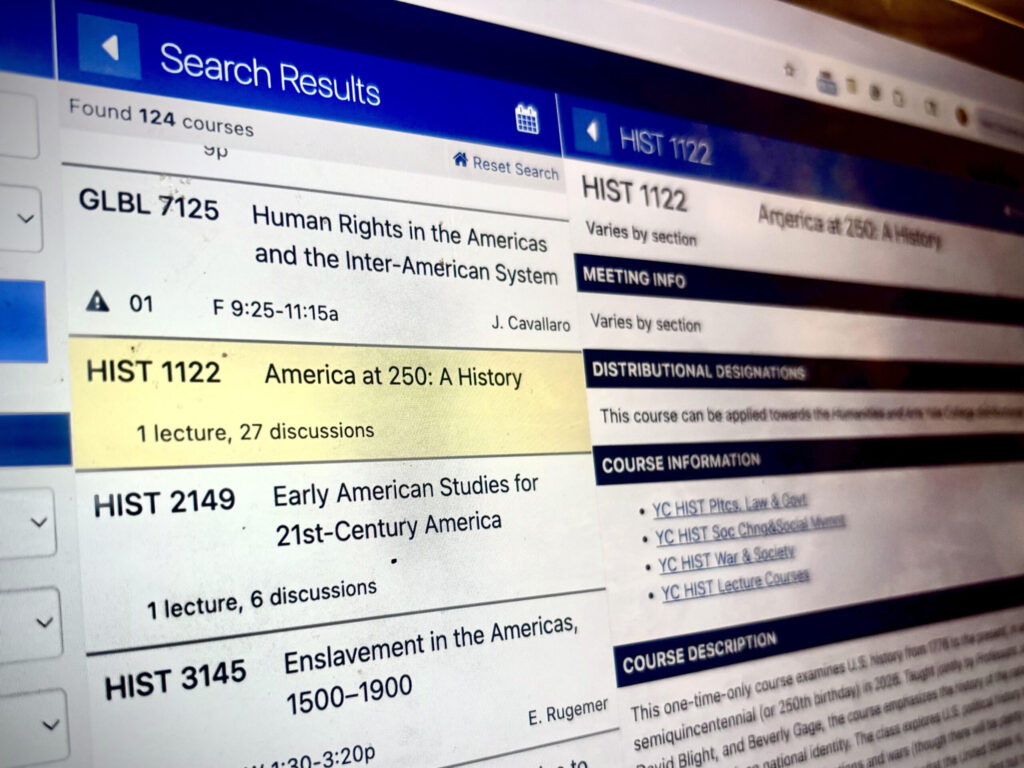
The true surprise, however, manifested itself in second place: "America at 250." This course, a singular historical offering, designed for a specific commemoration, drew 380 students.
Its one-time-only nature adds a particular piquancy; a transient academic event, yet one that held significant sway. Following closely, "Game Theory," with 375 students, solidifies the robust appeal of strategic thinking, an intricate dance of prediction and consequence. Professor Benjamin Polak, who guides these students through the nuances of decision-making, finds a genuine delight in the classroom's diversity. He notes the varied backgrounds, the differing majors, all converging on a shared intellectual pursuit, a situation he describes with a quiet wonder, almost a disbelief in the pleasure of his own profession.
• Microeconomics Dominance "Introductory Microeconomics" consistently ranks as the most popular course, enrolling 529 students this semester.• Unique Historical Appeal "America at 250," a one-time-only history course, secured second place with 380 students, an unusual feat for a non-recurring offering.
• Strategic Thinking Draws "Game Theory" maintains strong interest, enrolling 375 students, underscoring the enduring appeal of analytical subjects.
• Proactive Planning Professor O'Dea's team began planning for the increased "Introductory Microeconomics" enrollment in April, hiring teaching assistants and peer tutors earlier than usual.
• Extensive Support System The "Introductory Microeconomics" course now provides 28 discussion sections and approximately 60 drop-in office hours each week.
The Unseen Architecture of Pedagogy
The quiet hum of administrative and pedagogical effort often remains unseen beneath the surface of such large enrollments.
Professor O'Dea's team, anticipating the influx, began their preparations for "Introductory Microeconomics" back in April. This early planning, extending to the hiring of teaching assistants and peer tutors, suggests a meticulous foresight. To accommodate 529 students, the course now boasts 28 discussion sections and roughly 60 drop-in office hours per week.
This intricate web of support, designed to facilitate understanding across a vast student body, offers a glimpse into the substantial, often unacknowledged, scaffolding required to teach on such a grand scale. It represents a dedication to ensuring individual engagement, even within the most expansive academic settings.
What remains a fascinating, perhaps confusing, aspect is the simultaneous allure of the perennial and the singular.
Why does a course tied to a specific historical marker, "America at 250," resonate with nearly as many students as the always-present theoretical constructs of economics? Is it the immediacy of the milestone, the sense of participating in a particular moment in time, that draws them in such numbers? Or does it speak to a deeper, collective curiosity, a momentary alignment of interests, creating a shared experience that will not be repeated?
The answers, like so much in academic life, are likely as varied as the students themselves, each making a choice based on a complex, often unarticulated, blend of practicality and pure intellectual draw.
The lecture halls and seminar rooms, once echoing with familiar patterns, now witness a subtle, yet profound, recalibration of interest. It's not a sudden lurch, but a gradual, deliberate shift, like the slow turning of a great ship in deep waters. Students, navigating a landscape of both burgeoning opportunities and persistent uncertainties, choose their paths with a quiet intensity, a blend of practicality and burgeoning passion.
Shifting Ground in Academia
Consider the computer science departments.
Their spaces, once perhaps reserved for a certain kind of singular focus, now hum with a diverse energy.
The surge here isn't merely in coding proficiency; it extends into ethical AI, human-computer interaction, and the very philosophy of data. We see students meticulously crafting algorithms, yes, but also grappling with the societal implications, the fairness of their reach.
This is a unique confluence, where the analytical mind meets the ethical compass.
Engineering programs, too, reflect this evolution, with a growing emphasis on renewable energy systems, biomaterials, and resilient infrastructure. It's an embrace of tangible impact, a desire to build not just efficiently, but responsibly.
The Evolving Canvas of Humanities
The narrative surrounding the humanities often paints a picture of decline, yet a closer look reveals a vibrant transformation.
Students aren't abandoning the study of literature, history, or philosophy entirely; they are re-imagining its applications.
A history major might now diligently apply digital mapping techniques to trace ancient trade routes. A literature student could be using computational methods to uncover patterns in vast textual archives.
This is not a retreat from the qualitative, but an expansion of its investigative toolkit. Reports from publications such as the *Yale Daily News* often highlight this re-imagining, detailing how students, even within traditional disciplines, seek interdisciplinary anchors, weaving their insights into the larger tapestry of contemporary challenges.
A new kind of storyteller emerging.
Emerging Niche Appetites
Beyond the broad movements, a fascinating array of specialized interests is gaining traction.
Fields that once resided at the periphery now draw considerable attention, reflecting a nuanced understanding of global needs and future possibilities. Public health, for instance, has expanded far beyond epidemiology, encompassing intricate studies of food systems, mental wellness in digital spaces, and global health equity.
The arts, too, are seeing a resurgence in areas like interactive media, sound design for virtual environments, and digital fabrication, where traditional craftsmanship meets cutting-edge technology. Students are not just consuming culture; they are actively shaping its future, often in ways unforeseen just a few years prior.
This specific focus on novel combinations and specialized inquiry characterizes much of the current enrollment landscape.
• Interdisciplinary Bridge-Building A pronounced trend towards majors and minors that span traditional departmental boundaries, creating unique academic profiles.• Data's Ethical Dimension Strong interest in programs that combine technical data skills with considerations of ethics, privacy, and societal impact.
• Sustainable Solutions Focus Significant growth in fields addressing environmental sustainability, from climate data analytics to biomimicry and circular economy models.
• Digital Craft and Narrative Rising enrollment in courses that merge creative arts with digital tools, fostering new forms of expression and storytelling.
Other references and insights: See hereAs introductory microeconomics topped the list for at least three years in a row, the one-time-only "America at 250" ranked second.○○○ ○ ○○○

No comments:
Post a Comment