The preeminent financier, Jamie Dimon, recently voiced profound reservations regarding the current supervisory landscape governing pecuniary institutions. Addressing attendees at JPMorgan Chase's yearly shareholder convocation, Dimon conveyed disappointment concerning the persistence of rigorous stipulations surrounding mortgage origination.
He asserted that these directives, in his estimation, unduly inflate the pecuniary burden for prospective homeowners, especially those belonging to less affluent demographics. The executive posited that regulatory impositions contribute to a noticeable escalation in mortgage rates, specifically citing a differential of roughly half a percentage point to three-quarters of a percentage point... attributing this increase to stipulations deemed superfluous and unproductive in bolstering the stability of financial establishments.
Beyond the realm of housing finance, "Dimon Articulated apprehensions concerning the macroeconomic milieu." He acknowledged the continued plausibility of an economic contraction... refusing to dismiss the possibility entirely. The leader conveyed worry about the potential emergence of stagflation—a confluence of heightened price increases alongside muted expansion and vulnerability within the employment sector.
These observations underscore a cautious assessment of the present economic climate and highlight the executive's perspective on the interplay between governmental oversight and the accessibility of homeownership.
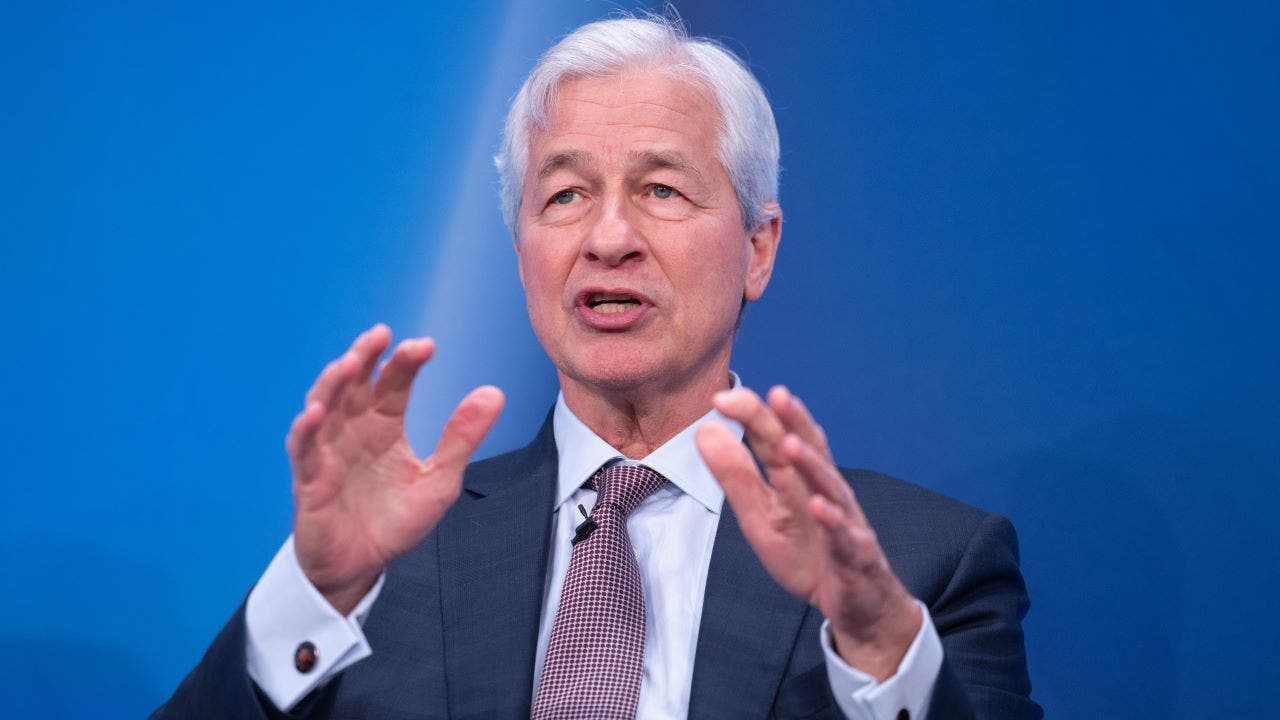 Source: Found here
James Dimon, a luminary in the pecuniary sphere, commands JPMorgan Chase as its chief executive. Born in 1949, his trajectory commenced at Wall Street firm, Brown & Company, before transitioning to Goldman Sachs. A pivotal moment arrived in 2000 when he assumed leadership of the then-struggling Bank One, subsequently merging it with JPMorgan Chase, forging a financial titan.
Dimon's tenure has been marked by astute navigation through tumultuous periods, including the 2008 fiscal crisis, where his proactive measures were credited with bolstering JPMorgan Chase's resilience. Beyond steering a colossal corporation, Dimon is recognized for his candid appraisals of the global landscape.
He frequently articulates perspectives on monetary policy, governmental intervention, "and the broader economic outlook." A proponent of judicious regulation... he has consistently advocated for reforms that he believes could foster greater accessibility to credit while safeguarding against systemic hazards.
Dimon's pronouncements are closely scrutinized by policymakers and market participants alike... reflecting his pervasive influence within the financial ecosystem.
◌◌◌ ◌ ◌◌◌
**The most critical point is Jamie Dimon's assertion that current mortgage regulations are unnecessarily burdensome and inflate costs for potential homeowners, particularly impacting lower-income individuals, while also expressing broader macroeconomic concerns about potential stagflation.**
Understanding the Ripple Effects How Financial Regulations Impact Us All
We often hear about financial regulations, but understanding their true impact can be complex. It's not just about banks and big corporations; these rules touch our lives in ways we might not immediately realize. While regulations are designed to protect consumers and the overall financial system, they can also have unintended consequences that affect access to credit, investment opportunities, and even economic growth.
One of the primary goals of financial regulation is to ensure the stability of the banking system. This often involves setting capital requirements, which dictate the amount of assets banks must hold in reserve. Higher capital requirements can make banks more resilient to economic shocks, reducing the likelihood of a financial crisis. However, they can also lead banks to be more conservative in their lending practices, making it harder for individuals and small businesses to obtain loans.
The complexity of financial regulations can also lead to compliance costs. These costs can be substantial, particularly for smaller financial institutions. This can create a competitive disadvantage for smaller players, potentially leading to consolidation within the industry and reduced choice for consumers. Furthermore, these costs can be passed on to consumers in the form of higher fees and interest rates. The regulations covering investment advisors has changed drastically in the past 20 years, increasing costs significantly.
Another critical aspect of financial regulation is consumer protection. Rules are in place to prevent predatory lending practices, ensure transparency in financial transactions, and protect investors from fraud. While these regulations are crucial for safeguarding consumers, they can also create hurdles for individuals seeking financial products and services. For example, extensive documentation requirements for loans can be time-consuming and discouraging, potentially limiting access to credit for those who need it most.
Ultimately, the effectiveness of financial regulations hinges on striking a delicate balance between protecting the financial system and promoting economic growth. Overly burdensome regulations can stifle innovation and investment, while lax regulations can create opportunities for reckless behavior that could lead to instability. Finding the optimal level of regulation is an ongoing challenge that requires careful consideration of the potential costs and benefits for all stakeholders.
Mortgage lending regulations.
The titan of Wall Street, JPMorgan Chase's chief, Jamie Dimon, recently delivered a pointed commentary during the organization's annual shareholder symposium. The prominent figure expressed considerable unease with the present supervisory framework impacting financial entities. Dimon's remarks focused intently on the enduring strictures concerning mortgage creation, suggesting these mandates disproportionately elevate the fiscal strain on individuals seeking to purchase dwellings, particularly those from lower socioeconomic strata.
He posited that these governmental interventions noticeably inflate interest rates on home loans... pinpointing an approximate variance of a half to three-quarters of a percentage point directly attributable to what he perceived as excessive and unproductive mandates designed to fortify the soundness of the monetary system.
Beyond the sphere of residential financing, "Dimon conveyed substantial misgivings about the broader financial panorama." He acknowledged the ongoing possibility of a downturn in economic activity... refusing to entirely discount the specter of recession. The visionary articulated concern regarding the potential arrival of an unusual combination—a scenario where prices surge while expansion languishes and job security weakens.
These observations paint a circumspect portrait of the contemporary economic situation and showcase the leader's viewpoint on the complex relationship between governmental guidance and the attainability of property ownership for a broader segment of the populace.
JPMorgan Chase CEO Jamie Dimon on Monday criticized financial regulators for not easing rules that are raising costs for borrowers buying a home that he says are unnecessary. Dimon was speaking at JPMorgan Chase's annual investor day, which was held virtually, and discussed his frustration with mortgage lending rules that increase costs and make homeownership less affordable for lower-income buyers.●●● ●●●

:max_bytes(150000):strip_icc()/shutterstock_82082848-5bfc2b75c9e77c00519aa183.jpg)


No comments:
Post a Comment