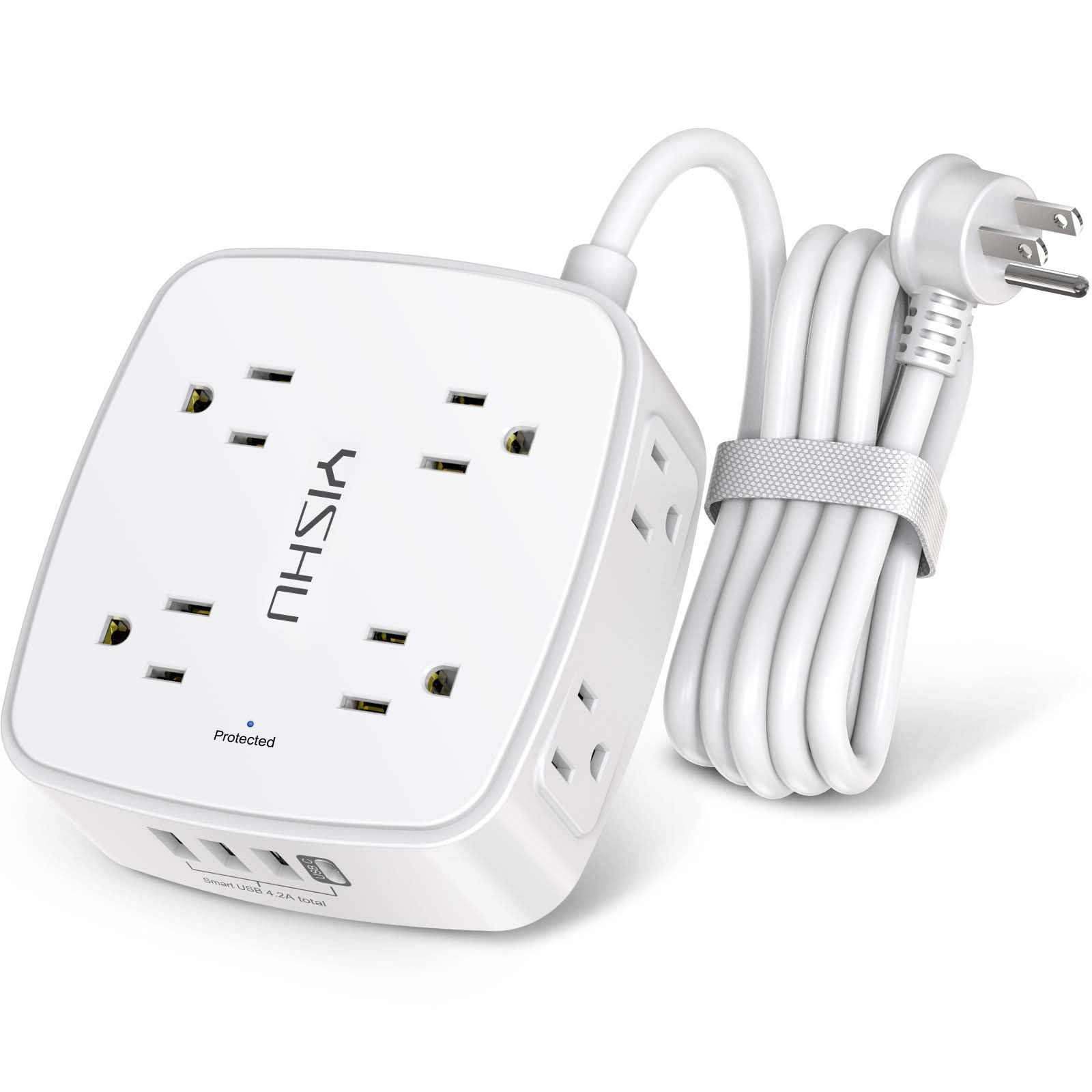
 Protecting your electronics from power surges is a relatively simple and inexpensive process. — 6 Ft Surge Protector Power Strip - 8 Widely Outlets with 4 USB Ports, 3 Side Outlet Extender with 6 Feet Extension Cord, Flat — $_.__
Get more details.
In our increasingly digital world, we rely on electronic devices more than ever before. From computers and smartphones to televisions and kitchen appliances, these gadgets have become essential to our daily lives. However, this reliance also means we're more vulnerable to the dangers of power surges. Understanding surge protection and investing in the right equipment is crucial to safeguarding your valuable electronics and ensuring their longevity.
What exactly is a power surge? Simply put, it's a sudden spike in electrical voltage that exceeds the standard level flowing through your home's wiring. These surges can originate from various sources, including:
• Lightning Strikes These are the most dramatic, but also the least frequent, cause of power surges. A direct lightning strike can deliver an immense amount of energy into the electrical grid, causing widespread damage.• Internal Appliances Surprisingly, many surges originate from within your own home. Appliances with motors, such as refrigerators, air conditioners, and washing machines, draw large amounts of power when they switch on and off. This sudden demand can create small surges that, over time, degrade sensitive electronics.
• Faulty Wiring Problems with your home's electrical wiring, such as loose connections or damaged insulation, can create conditions that lead to power surges.
• Utility Grid Issues Problems at the power company, such as equipment failures or grid switching, can send surges down the line and into your home.
The effects of a power surge can range from minor annoyances to catastrophic damage. Small surges can gradually degrade the components of your electronics, shortening their lifespan and leading to performance issues. Larger surges can cause immediate and irreversible damage, frying circuits, destroying data, and rendering devices unusable.
Protecting your electronics from power surges is a relatively simple and inexpensive process. The most common and effective solution is to use surge protectors. These devices are designed to absorb excess voltage and divert it away from your sensitive electronics, preventing damage.
When choosing a surge protector, there are several factors to consider:
• Joules Rating This rating indicates the amount of energy a surge protector can absorb. A higher joules rating means greater protection. For general use, a rating of at least 600 joules is recommended, while more sensitive electronics like computers and home theater systems should have surge protectors with ratings of 1000 joules or higher.• Number of Outlets Consider how many devices you need to protect and choose a surge protector with an adequate number of outlets.
• USB Ports Many modern surge protectors include USB ports for charging mobile devices. This is a convenient feature, but make sure the ports offer sufficient charging power (amps) for your devices.
• Clamping Voltage This is the voltage level at which the surge protector begins to divert excess voltage. A lower clamping voltage provides better protection. Look for a surge protector with a clamping voltage of 400 volts or less.
• Response Time This is the time it takes for the surge protector to react to a surge. A faster response time is better. Look for a surge protector with a response time of less than one nanosecond.
• Certification Look for surge protectors that are UL (Underwriters Laboratories) certified. This ensures that the device has been tested and meets safety standards.
Beyond surge protectors, consider these additional measures to protect your electronics:
• Unplug During Storms If you know a severe thunderstorm is approaching, unplugging your sensitive electronics is the best way to protect them from lightning strikes.• Use a Whole-House Surge Protector These devices are installed at your electrical panel and provide protection for your entire home. They are more expensive than individual surge protectors but offer comprehensive protection.
• Regularly Inspect Wiring Have your home's electrical wiring inspected by a qualified electrician to identify and address any potential problems.
• Use Battery Backups For critical devices like computers and servers, consider using a battery backup (UPS). These devices provide temporary power in the event of a power outage, allowing you to safely shut down your equipment and prevent data loss.
By understanding the risks of power surges and taking proactive steps to protect your electronics, you can save yourself from costly repairs and replacements. Invest in quality surge protection, practice good electrical safety habits, and enjoy the peace of mind that comes with knowing your devices are safe and secure.
Get It On Amazon ::: (brought to you by Kiitn)
See product here.
#9 ⁙ 6 Ft Surge Protector Power Strip - 8 Widely Outlets with 4 USB Ports, 3 Side Outlet Extender with 6 Feet Extension Cord, Flat Plug, Wall Mount, Desk USB Charging Station, ETL,White ⁙ 4.7 out of 5 stars ⁙ 25,169 ⁙ $12.98
#Ad Our articles include affiliate links: If you buy something through a link, we may earn a commission 💕
[ Buy It Here ]


No comments:
Post a Comment