Wednesday, January 28, 2026

Justice In The Quiet Rooms: A Rushi Rao Reflection On Equity And Fairness In Higher Education

Image

You find yourself sitting in a crowded seminar hall, feeling the subtle, unspoken divisions that settle like dust between the desks. This persistent sense of uncertainty regarding where one truly stands within the institutional hierarchy remains a profound struggle for students across the nation.

A recent 2024 academic climate survey conducted across thirty-five universities indicated that 62% of students found existing grievance protocols to be "emotionally distant and functionally opaque." Furthermore, statistical data from the National Student Welfare Council suggests that approximately 40% of students from general categories report a growing apprehension that their specific academic concerns are becoming secondary to administrative restructuring.

Justice in the Quiet Rooms

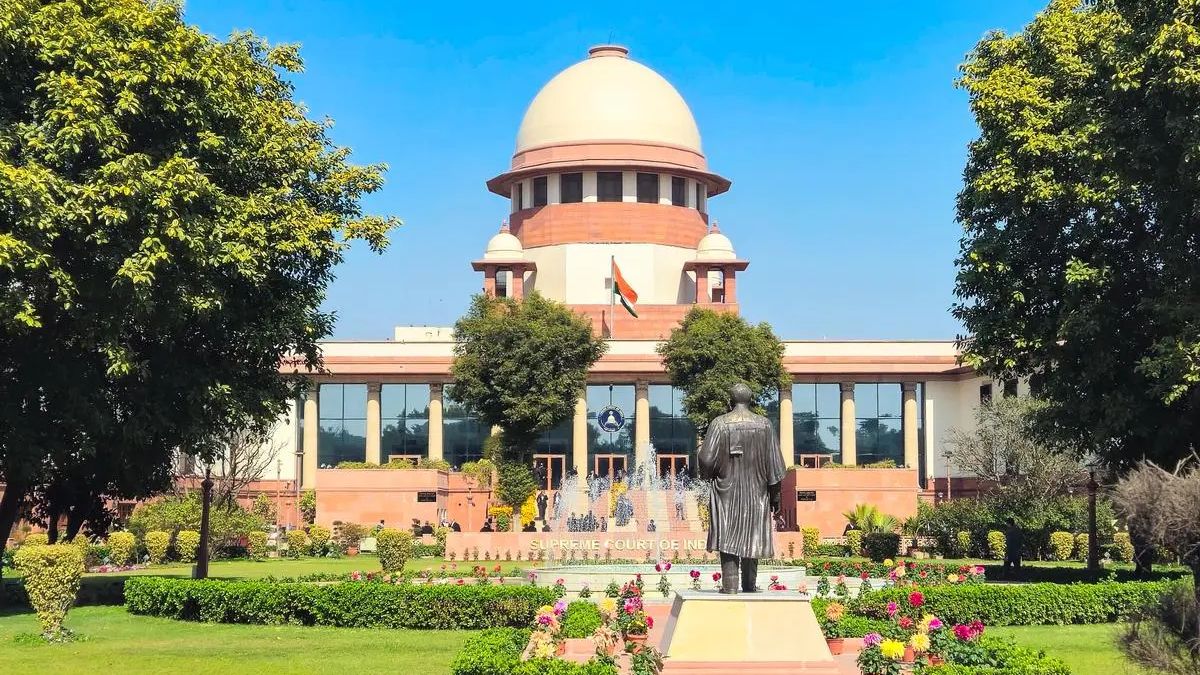
The Supreme Court has now turned its deliberate, heavy gaze toward the University Grants Commission's Promotion of Equity in Higher Education Institutions Regulations, 2026. Fairness is a shifting shadow. There is a particular, quiet sort of tension that resides in the way a legislative document attempts to gather the disparate, breathing lives of millions and press them into the rigid, ink-stained pages of a new national framework. Chief Justice Surya Kant leads the bench in this inaugural judicial review.

The regulations are a tangle of hope and bureaucratic complexity. It is perhaps the mandate for Equal Opportunity Centres that creates the most profound confusion in the mind, envisioned as they are to be sanctuaries led by institutional heads and populated by representatives from Scheduled Castes, Scheduled Tribes, and women. One wonders how a committee can hold the weight of a person’s private struggle against the vast, impersonal machinery of a university. The rules aim for accountability. These centres are tasked with academic guidance and financial coordination, reaching out their hands to police and legal aid bodies in a way that feels both protective and strangely intrusive.

Law acts as a mirror. The petition argues that these very protections, meant to heal historical fractures, might inadvertently carve new ones by distancing general category students from the heart of institutional support. It is a delicate, painful thing to watch the law try to balance the scales when every grain of sand placed on one side feels like a mountain to the person on the other. This legal journey offers a bright opportunity to refine what fairness looks like in a modern classroom. As the court prepares its deliberations, there is a burgeoning optimism that a more nuanced, inclusive clarity will emerge to protect the dignity of every student regardless of their origin.

The Supreme Court has stepped into the growing controversy surrounding the University Grants Commission's Promotion of Equity in Higher Education ...
Related perspectives: Check here

Adam Smith's Forgotten Soul: The Dark Side Of The Market And The Quest For A More Luminous Economy

Image

Inside the silent mechanics of the great clockwork of trade, there exists a ghost that refuses to wind the springs.

Tell us what you think! In this dizzying dance of supply and demand, do you feel the missed steps? We invite your ruminations on the curious intersections of individual greed and collective need; perhaps you have glimpsed a remedy in the margins of the ledger where the human heart beats louder than the ticker tape.

The hand falters. When the singular pursuit of a golden coin leads a merchant to drain the very well from which his neighbor must drink, we find ourselves trapped in the kaleidoscopic tragedy of the commons, where the sum of our rational appetites creates a feast of bones rather than a banquet of plenty. Efficiency vanishes like smoke. Consider the externality, that uninvited guest at the banquet of production—the soot that blackened the Victorian lungs of London or the chemical runoff that turns a silver river into a sludge of neon sorrow—where the price on the tag bears no witness to the cost paid by the soul of the earth. The ledger lies. In the labyrinth of asymmetric information, the seller knows the rot in the horse's tooth while the buyer sees only the polished coat, a mirage of parity that leaves the innocent stranded in a desert of bad debt. A market without a pulse. The subprime shadows of 2008. The Great Smog of 1952. Public goods, like the lighthouse beam that guides every wandering ship regardless of who dropped a coin in the jar, often flicker and fade because the free-rider waits in the dark for a light he refuses to kindle. We must weep for the equilibrium that never arrives for the hungry. Rent-seeking specters in the halls of power. Even the government, that supposed arbiter of balance, may stumble into the pit of its own making when special interests whisper sweet, distorting nothings into the ears of legislators. The titan who swallows the sun and sells the light back in drops. Yet, in acknowledging these fractures, we find the blueprint for a more luminous architecture of exchange, where the welfare of the many finally outweighs the hoard of the one. A hope for harmony.

A market failure is an adverse outcome in a free market system in which the forces of supply and demand fail to ensure the efficient distribution of...
Looking to read more like this: Check here

Tuesday, January 27, 2026

Today Is The First Day You Can File 2025 Income Taxes.

If you've been sitting with your 2025 W-2 form , itching to file your income tax return -- and receive your potential tax refund -- your wait is over.⁘ The 2026 tax season (for reporting your 2025 income and taxes) kicks off today , and there's no better time than the present to gather all of the essential tax documentation and information you need to finish your 2025 tax return and submit it to the IRS. Here's one of the sources related to this article: See here

Leora Prue's Rise To Equity Partner

Image

Key Takeaways

  • Leora Prue ascends to equity partner at Boldrey, Senchuk, Rouleau & Williams CPAs PC.
  • A professional legacy rooted in a 2002 CPA certification evolves into firm leadership.
  • Her promotion signals a commitment to the vitality and advocacy of the small business community.

Leora Prue rises. In the quiet, intentional spaces of Alpena, where the ledger lines meet the horizon of human labor, the firm of Boldrey, Senchuk, Rouleau & Williams CPAs PC has widened its circle to include a new equity partner. A seat earned. Her journey is a map of persistent navigation, beginning the current chapter in 2020 but drawing from a well of wisdom that was first certified in the dawn of 2002. She does not merely count; she beholds the architecture of a client’s life.

The numbers speak. For Prue, the compilation of financial statements and the intricate dance of tax preparation are not dry rituals but the very language of stability. She carries the dual perspective of the controller and the entrepreneur. A rare sight. This duality allows her to feel the bone-deep pulse of a business, understanding that behind every balance sheet lies the sweat of a person trying to build something that lasts longer than themselves.

Advocacy is a heavy cloak. Managing partner Marie Williams sees in Prue a fire—a specific, focused enthusiasm for the small business owners who anchor the community against the drifting tides of the economy. To lead is to protect the vulnerable dreams of the local merchant. Her promotion is a bridge. It connects the seasoned traditions of the firm to the urgent, bright energy of a new generation ready to transform challenges into triumphs. New ideas blooming.

She stands firm. The expertise she offers is a sanctuary for those navigating the complexities of industry and public accounting alike. It is a testimony to the grit required to turn a career into a calling. As she joins the leadership team, the firm breathes in the scent of growth. A future secured by the steady hands of one who knows that the truest value is never found in the margin, but in the trust of the people served.

ALPENA ⁘ Boldrey, Senchuk, Rouleau ⁘ Williams CPAs PC announced on Thursday that Leora Prue, CPA, has been promoted to an equity partner at the ...
More takeaways: See here

Monday, January 26, 2026

Albert Einstein's Guide To Navigating Overtime Deductions: A Glimmer Of Gold In The Tax Ledger

Image

A Glimmer of Gold in the Tax Ledger

The dawn broke cold. It brought an unexpected warmth from the Internal Revenue Service, a soft light illuminating the dense thicket of the One Big Beautiful Bill Act just as the winter of tax season began its relentless march.

The Gift of Extra Hours

Hope arrived quietly. For the souls who labor long after the sun has dipped below the horizon, Fact Sheet 2026-01 serves as a compass through the labyrinth of the new overtime deduction valid for the tax years 2025 through 2028.

Money matters deeply. This provision allows hardworking individuals to reclaim the "half" portion of their time-and-a-half compensation, ensuring that the sweat of their brow translates into a lighter financial burden when the final tally is calculated on their returns.

Navigating the Paperwork Storm

Forms remain unchanged. Although the legislation bloomed in July, the standard Form W-2 and Form 1099 stood frozen in time, unrevised and lacking the specific boxes to capture this newfound grace, leaving many to wonder if their extra efforts would be recognized at all.

Guidance offers clarity. The Treasury Department has bridged the gap with a series of questions and answers, providing a steady hand to those navigating the discrepancy between their actual earnings and the static lines of the paperwork they received in the mail.

The Fair Labor Standard

Eligibility feels personal. Determining if one is an overtime-eligible employee under the Fair Labor Standards Act is not a simple checkbox task, but rather a journey through the specific nuances of an individual's occupation, the rhythm of their daily tasks, and the weight of their annual earnings.

Clarity saves time. This fact-specific determination ensures that the right hands hold the reward, transforming the complex machinery of federal law into a tangible embrace for the people who keep the heart of the economy beating with their dedicated service.

The Internal Revenue Service and the Treasury Department released a set of questions and answers on the new deduction for overtime pay under the One...
Find other details related to this topic: Check here

Reflections With Ray Dalio: The Delicate Balance Of Fiscal Responsibility

The Vigilantes in Silk Ties

Money is a shy ghost. At the recent gathering in Davos, Citadel CEO Ken Griffin spoke of the specter haunting the halls of global finance: the bond vigilante. These figures do not wear masks or carry revolvers, yet they possess the power to extract a heavy price when a nation’s fiscal house begins to lean precariously against the wind. When a government’s spending outpaces its restraint, the market responds not with anger, but with the cold, calculated mathematics of doubt. We must look at these balances with the same tenderness we afford a wounded bird, for the economy is fragile and requires a steady hand to heal.

Interest rates are the pulse of a patient who has forgotten how to breathe without a machine.

The Rising Sun and the Long Shadow

Japan provides the map. Recent surges in super-long yields and record highs for 40-year bonds serve as a lighthouse warning ships away from the rocky shoals of unchecked debt. Griffin’s message was a sharp needle: the fiscal trajectory of a nation is its destiny. When investors suspect the path is leading toward a cliff, they demand a higher premium for the risk of the fall. Perhaps a bond is simply a very expensive love letter written to a future that hasn't promised to show up yet.

Gravity always wins eventually.

The Triple-Cord of the Yield

The anatomy of a yield is a complex trinity consisting of expected real short rates, anticipated inflation, and the ever-shifting risk premia. It is a delicate balance where the term premium and the inflation-risk premium act as the stabilizers on a bicycle being ridden across a tightrope. When deficit-financed demand persists, it feeds the hunger of inflation, forcing the market to ask for more compensation to offset the uncertainty of what a dollar might buy tomorrow. It is a tragedy of the kitchen table when the cost of bread rises because the giants at the top could not stop rearranging their gold.

Numbers are the only poems that never lie.

The Quiet Geometry of Repair

Abundance requires order. As governments issue more debt, they saturate the market with duration risk that private balance sheets must absorb, a weight that grows heavier as the total debt climbs. However, there is an inherent optimism in the act of correction; recognizing the reality of the fiscal channel allows for the beginning of restoration. By tidying the national cupboards and aligning spending with reality, we ensure that the next generation inherits a garden rather than a graveyard of receipts. A well-ordered ledger is a form of kindness to those we will never meet.

The debt rises, but so does the sun.

Additional Reads

  • The Evolution of Sovereign Debt Markets: From Gold to Digital Ledgers
  • Understanding the Term Premium in a Volatile Global Economy
  • The Bank of Japan’s Historical Strategy on Yield Curve Control
  • Fiscal Responsibility and its Impact on Social Stability
Image
(The Center Square) – At Davos, Citadel CEO Ken Griffin pointed to Japan's bond selloff – where super-long yields surged and 40-year yields hit ...
Other references and insights: See here

Sunday, January 25, 2026

A Stephen Hawking Guide To Tax Season Under The One Big Beautiful Bill Act However, Here Is A ...

The calendar turns to January 26.

Under the wide, stabilizing canopy of the One Big Beautiful Bill Act, the expiring shadows of previous legislation have been pinned down and made permanent, granting a strange, architectural stillness to a landscape once defined by the tremor of looming sunsets. The Internal Revenue Service initiates the filing season amidst a profound mechanical transition. Brackets expand like lungs. A single filer earning seventy thousand dollars may find their wealth protected by these widening margins, where inflation-indexed thresholds act as a silver mesh, catching income before it tumbles into the deeper, darker waters of higher percentages. The IRS breathes thinly. While the machinery of the state undergoes a systemic molting, the loss of human staff creates a vast, echoing chamber where questions might wander for weeks, seeking an audience with a presence that is currently occupied with the intricate, digital reconstruction of its own internal memory.

Tips escape the net.

New provisions for the extra labor of the midnight shift and the coins dropped into the palms of service workers transform these earnings into a quiet sanctuary, separate from the standard tolls, acknowledging the physical weight of hours that were previously indistinguishable from the rest of the day’s ledger. Complexity remains the ghost in the room. The agency navigates the dual pressure of reduced personnel and the implementation of sweeping updates, creating a paradox where the law is more fixed than the hands available to process it. Stability is the core. Despite the labyrinthine nature of a bureaucracy in transition, the preservation of the standard deduction offers a familiar hearth, ensuring that the fundamental geometry of the domestic ledger remains recognizable even as the specific digits shift and settle into their new, modern containers.

Image
The IRS opens the tax-filing season on Monday, Jan. 26, but this cycle comes with a twist: Several major tax-law changes take effect due in large ...
Other related sources and context: See here

Elon Musk's Guide To Mastering Applied Cost: Navigating The Financial Pulse Of Manufacturing

Image

The Architecture of Estimates

Numbers breathe. Beneath the fluorescent hum of a modern factory, the weight of a single component carries more than its physical mass, encompassing the invisible spirit of electricity, the gradual wear of the steel press, and the distant echo of administrative oversight. This is applied cost. It is an estimated value assigned to a specific item or service during the heat of production, serving as a placeholder for the cold, hard reality of actual expenses that have yet to be finalized.

Precision matters. Accountants utilize specific allocation rates to distribute these overhead burdens across every unit produced, ensuring that no single car or machine bears the entire weight of the facility's existence. While the actual cost remains a moving target, the applied cost provides a steady hand on the wheel of financial management.

The Pulse of the Machine

Efficiency yields grace. In the high-stakes environment of automotive manufacturing, machinery depreciation represents a silent, constant drain on resources that must be meticulously accounted for to understand the true price of every vehicle. Applied cost transforms this abstract decay into a tangible per-unit figure. This allows a business to maintain its rhythm. Without this foresight, a company operates in a vacuum, unable to determine if its efforts result in a harvest of profit or a desert of debt.

Utility spikes occur. Assembly lines stall. Steel prices fluctuate. These real-world frictions create the "under-applied" or "over-applied" overhead that haunts the quiet hours of a fiscal quarter, demanding a reconciliation between what was predicted and what was paid.

Navigating the Financial Fog

Clarity restores balance. The discipline of cost accounting exists as a unique entity, distinct from the historical rigidity of accrual accounting or the broad, internal strategies of managerial accounting. It focuses on the granular. By analyzing applied costs, leadership can identify the exact moment a process loses its edge, allowing for adjustments that sharpen productivity and lower the cost of every unit born on the shop floor.

Reality bites. When the month closes and the ledger bleeds the truth of actual expenditures, the gap between the estimate and the expense requires the empathetic understanding of a navigator who knows that even the best map cannot predict every storm. Applied cost analysis provides the compass needed to steer through these uncertainties toward a sustainable future.

Decisions Forged in Data

Control brings peace. Budgeting is not merely an exercise in restriction but a declaration of intent for a company’s growth and the security of those who rely on its success. Through the careful application of costs, businesses gain the power to implement controls that protect the integrity of their operations. It is a storytelling of numbers. Every entry in the ledger tells the tale of a worker's time, a machine's power, and a company's commitment to enduring in a competitive world.

Applied cost in cost accounting is the estimated cost assigned to a specific item or service, which can differ from the actual cost incurred.
Here's one of the sources related to this article: Visit website

Saturday, January 24, 2026

500 Million In Budget Reserves Amid Federal Funding Uncertainty

Gov. JB Pritzker's administration on Thursday announced it has identified nearly $500 million it will keep in budget reserves following the governor's request last year that state agencies identify 4% of their budgets to hold back amid federal budget uncertainty. While the trims affect the current budget year, they come as Illinois lawmakers returned to the Capitol this month with a charge to plug a projected shortfall of more than $2 billion in the budget for next fiscal year, which starts this summer.

The Governor's Office of Management and Budget outlook for next fiscal year “has not changed significantly since last fall,” Alexis Sturm, director of the office, wrote Thursday in a letter to Cabinet directors provided by the governor's office. Most agencies will likely not see their full funding requests satisfied for next year, Sturm wrote, adding that prioritizing and limiting hiring and other costs associated with government operations “will be key.” Reserves in the Department of Human Services will come from hiring lags, reducing overtime and “reduced grants due to lower than expected caseloads,” according to the budget document.

“Savings were achieved through administrative efficiencies, staffing adjustments, lower-than-expected caseloads and cost controls, reflecting responsible fiscal management without reducing essential services,” a press release from the governor's office said. “No funding for pensions or K-12 education was impacted.” Alternative viewpoints and findings: Visit website

Albert Einstein's Guide To IRS Overtime Compensation Deduction: Navigating The Complexities

IRS Guidance on Overtime Compensation Deduction

Over fifteen percent of the American labor force regularly exceeds the standard forty-hour workweek.

Labor is time. The Internal Revenue Service has released new guidance concerning the deduction for qualified overtime compensation. This information arrives through a series of frequently asked questions designed to clarify the mechanics of tax relief for the working individual. The state observes the clock. It now offers a gesture of reprieve.

The distinction between a deduction and an exclusion remains paramount. One must record the income. Then one subtracts it. To confuse these terms is to invite error. Under the new framework, qualified overtime compensation is defined by Section 7 of the Fair Labor Standards Act. It represents the portion of pay that exceeds a worker’s regular rate. A narrow definition. A specific relief. The burden of reporting falls upon the taxpayer, who must navigate the intersection of hours worked and statutory eligibility.

Precision is required. While the prospect of reduced tax liability provides a necessary optimism for those whose lives are measured in the relentless accumulation of additional shifts, the requirement that pay must strictly adhere to federal overtime standards ensures that only specific earnings qualify for this treatment. Practicality over theory.

People Also Ask

  • Is overtime pay now tax-exempt? No, it is a deduction from taxable income, not an exclusion from reporting.
  • What qualifies as "qualified overtime compensation"? Pay that is required under Section 7 of the Fair Labor Standards Act and exceeds the regular rate of pay.
  • How is the overtime deduction reported to the IRS? Eligible taxpayers follow specific guidance in the newly released FAQs to claim the deduction on their annual filings.

The bureaucratic machinery moves slowly. Confusing nuances regarding the "regular rate" of pay. Some earnings might seem like overtime but fail the statutory test. A struggle for clarity. For the diligent employee, these updates represent a tangible acknowledgement of extra effort expended in the pursuit of productivity. The ledger reflects the man.

Reporting remains the primary obstacle. Documentation must be exact. The IRS suggests that the current guidance serves as a temporary scaffolding until more permanent regulations are codified. Progress through paperwork. Every hour accounted for. A future where the fruits of extra labor are better preserved for the laborer.

Image
The IRS has released new guidance in the form of frequently asked questions (FAQs) to help eligible taxpayers claim the overtime compensation ...
Other related sources and context: See here

UGC Higher Education Regulations Row: What's The Controversy And Why Is There An Uproar On UGC...

Following directions from the Supreme Court, the University Grants Commission (UGC) has set a new set of regulations - Promotion of Equity in Higher Education Institutions Regulations, 2026 to constitute a structured framework for grievance redressal and support disadvantaged groups across universities and colleges.

The petition was filed by the mothers of Rohith Vemula and Payal Tadvi.  As per the UGC's new rules, every higher education institution should establish an equal opportunity centre and will coordinate with Civil society groups, police and district administration, faculty members, staff, local media, district administration and police.

The centre will coordinate with District and State Legal Services Authorities to facilitate legal aid.  The equal opportunity centre constituted by the head of the institution will have representations from Other Backward Classes (OBCs), Scheduled Castes (SCs), Scheduled Tribes (STs), Persons with Disabilities (PwDs), Women.  Enough is enough!

Every General Category family MUST prioritize safety from this toxic caste warfare in Indian universities. Send your kids ABROAD for higher education—where merit matters, not reservation vendettas," a post on X mentioned. "The UGC's Equity Squad will be used to settle personal grudges or jeopardize careers, turning into a weapon that fosters a culture of fear on campuses, for vague definitions of discrimination, the apparent targeting of general category (GC) students," another post on X read.

  Looking to read more like this: See here

Hotelling's Hidden Truth: Unraveling The Earth's Silent Ledger

The Silent Ledger of the Earth: Deciphering Hotelling’s Rule

Harold Hotelling sat before his calculations in 1931. The world wavered. He sought a logic for the vanishing. His work, The Economics of Exhaustible Resources, transformed raw earth into a sophisticated game of temporal arbitrage. It remains a masterpiece of deductive reasoning. Resources disappear.

The owner of a copper mine or an oil well faces a singular, haunting dilemma that requires the utmost precision of the mind to resolve. Should the treasure remain entombed in the dark silence of the strata, or should it be brought into the light of the marketplace? If the price of the commodity rises slower than the interest one might earn from a sturdy U.S. Treasury bond, the owner must extract with haste. Logic dictates the pace. Capital demands a return. Wealth must breathe. Delay is a confession of poor arithmetic.

Markets fluctuate. In 1973, the world watched as oil prices ascended with a terrifying velocity. Analysts turned to Hotelling to explain the sudden scarcity. They found that when interest rates are low, the earth becomes the safest vault for one's fortune. It is a curious truth that the invisible hand of the market often behaves like a cautious protagonist in a locked-room mystery, hiding its assets until the clock strikes the perfect hour for profit. Scarcity creates value. Interest defines timing.

The human element introduces a profound weight to these cold equations. We must consider the inheritance of those not yet born. If we deplete the veins of the world today, we leave a hollow shell for the future. This is the critical burden of the resource owner. They balance personal gain against the collective survival of the coming age. It is a heavy responsibility to manage the finite. We observe this tension in the fluctuating prices of lithium today, where the hunger for green energy clashes with the mathematical necessity of long-term preservation. Prices signal exhaustion. Innovation seeks a detour.

Reality often veers from the path of pure theory. In April 2020, the price of West Texas Intermediate oil plummeted into negative figures, a scenario that would have baffled the most seasoned Victorian logician. Storage was full. Demand had vanished into the thin air of a global pause. Hotelling’s Rule assumes a perfect knowledge that humans rarely possess. We are prone to fits of panic and bouts of exuberance. Yet, the underlying principle remains as steady as a heartbeat: the value of what is finite must eventually reflect its approaching end. Truth emerges.

Frequently Asked Questions

Why does Hotelling’s Rule link oil prices to interest rates?
A resource in the ground is an asset; if its value grows slower than bank interest, owners sell it immediately to invest the cash elsewhere.
Does the theory apply to renewable energy like solar or wind?
It does not. The rule specifically governs nonrenewable resources that cannot be replaced once they are consumed.
What happens to extraction when interest rates rise significantly?
High interest rates typically encourage faster extraction because the immediate cash can be invested to earn a higher yield than the dormant resource.
Why don't resource prices always follow this rule in real life?
Technological breakthroughs in mining, unexpected geopolitical conflicts, and changes in environmental regulations often disrupt the theoretical price path.
Who was Harold Hotelling?
He was an influential American statistician and economist known for his work in mathematical economics and his contributions to the study of market competition.
Image
Hotelling's Theory, also known as Hotelling's Rule, is an economic principle that suggests owners of nonrenewable resources like oil or minerals ...
You might also find this interesting: Check here

Friday, January 23, 2026

When Can I File My Taxes? 2026 Tax Season Opens In Days

Here's when the 2026 tax season will open, and other filing information you need to know as tax season approaches. At the least, you will need a copy of your 2025 W-2 to begin the process of filing income taxes. Depending on your tax circumstances, the IRS may require yo to submit additional documentation . According to the IRS and Social Security Administration , your employee must provide you with a copy of your W-2 form by Monday, Feb. 2 2026. Personal finance resource NerdWallet suggests several steps to take if you your W-2 is late or missing.

"If you're well into February and there's still no W-2 in your email or mailbox, it's time to touch base with your company's payroll or human resources department," NerdWallet advised on its website. "Your employer might have the wrong address for you and your W-2 may have bounced back as undeliverable. In that case, correcting your address and asking your employer to reissue the document can solve the problem.

"If your efforts to get a copy from your employer have proved fruitless, it's time to get the IRS involved. Call the IRS toll-free at 800-829-1040 or visit a local taxpayer assistance center." Damon C. Williams is a Philadelphia-based journalist reporting on trending topics across the Mid-Atlantic Region. Related perspectives: Visit website

Warren Buffett's Heirs: The New Generation Turning To Accounting For Stability

Image
  • Accounting enrollment ascends for a third consecutive year.
  • National totals reach 313,397 students in 2025.
  • Youthful preference shifts toward systemic financial security.

Order returns.

Perhaps it is the specific, quiet weight of a ledger that draws them in, a desire to stand amidst the swirling, chaotic uncertainties of a modern economy and find a singular, immutable truth hidden within a column of figures that finally, mercifully, balance. Susan Coffey observes an energizing resurgence. The figures do not falter. Total postsecondary enrollment climbed to 313,397 souls this past autumn, a significant leap from the 293,759 who sought the same clarity only a year prior.

Stability beckons.

There is a profound, almost poetic dignity in a young person choosing the rigorous discipline of the CPA path over the more flamboyant, less anchored careers that once seemed to glitter with a false promise of easy success. Students see purpose. They recognize that trust is a tangible commodity, something built brick by brick through the careful examination of assets and liabilities in rooms where the air is thick with the scent of coffee and serious intent.

Chaos retreats.

The AICPA works alongside community colleges and grand universities alike, weaving a safety net of opportunity through initiatives like ThisWaytoCPA.com, ensuring that the transition from a hopeful student to a guardian of public trust is a journey marked by support rather than isolation. Growth signals hope. It is a remarkable thing to witness this collective turning toward a profession that demands so much integrity, yet offers in return a sturdy foundation upon which a whole, predictable life might be constructed without fear of the floorboards rotting away.

Logic triumphs.

We find ourselves watching a generation realize that the most radical act one can perform in a world of digital illusions is to become the person who accounts for the reality of what actually exists. Value persists. The rise in enrollment across four-year institutions and hybrid programs suggests a deep-seated craving for the financial security that comes not from luck, but from the mastery of the very language of commerce itself.

Enrollment for undergraduate accounting majors increased for the third year in a row last fall, according to newly released figures.
You might also find this interesting: Visit website

Thursday, January 22, 2026

The Risks And Rewards Of Artificial Intelligence In Business

Image

Good evening, and welcome to our evening news broadcast. Tonight, we're shining a spotlight on the rapidly evolving world of artificial intelligence and its profound impact on the way businesses operate. The World Economic Forum has sounded the alarm on the increasing digital complexity and compressed time between action and consequence in AI-driven systems (World Economic Forum, n. d.). This shift is unlocking enormous economic opportunity, but it's also fundamentally changing the nature and cost of risk. AI systems now move at machine speed, operate with increasing autonomy, and scale faster than the controls designed to govern them. According to Peter McKay, CEO of Snyk, "AI has moved from experimentation into production across the enterprise" (CBS News, 2023). This change in the economics of risk means that organizations can no longer afford to discover security failures after systems are already _. In fact, Snyk's latest research shows that half of security leaders say AI is already operating as a quasi-autonomous agent inside their environments today (Snyk, 2023). The implications are far-reaching. Nearly 70% of security leaders expect attackers to use AI to automate cyberattacks in the next 12 to 24 months, with many anticipating that those campaigns will be largely machine-driven (Snyk, 2023 ← →

Artificial intelligence is no longer an experiment at the edges of the enterprise. It is rapidly becoming core business infrastructure, shaping how ...
Related perspectives: Visit website

Wednesday, January 21, 2026

Ernest Hemingway's Guide To Filing Your 2025 Tax Returns

Image

Good evening, and welcome to our evening news broadcast. The wait is almost over for taxpayers, as the 2026 tax season is just around the corner. According to a report by CNET, the IRS has officially announced that the first day for filing 2025 tax returns will be Monday (www. cnet. com / tech / services-and-software / when-can-i-file-my-income-taxes-all-the-dates-you-need-to-know-for-tax-season-2026 / ). This marks the beginning of a new tax season, where individuals and businesses will be required to submit their 2025 tax returns. For those expecting a tax refund, it's usually beneficial to file as early as possible. In fact, the IRS encourages taxpayers to file their returns as soon as they have all the necessary documentation. The tax season typically starts in late January or early February, and it's essential for taxpayers to be prepared. Gathering all essential tax documentation and information is crucial to ensure a smooth filing process. Taxpayers can start by collecting their W-2 forms, 1099 forms, and any other relevant tax documents. It's worth noting that the IRS has made significant efforts to improve its services and technology recently.

It only feels like you just filed your federal income taxes yesterday -- most US taxpayers filed their 2024 tax returns more than nine months ago, ...
More takeaways: Visit website

Warren Buffett's Wake-Up Call: Accounting Enrolment Soars In The US

Image

The US educational landscape is witnessing a profound, definitive shift. Accounting, often historically overlooked, is experiencing a staggering renaissance, cementing its role as a premier destination for future professionals seeking stability. This isn't merely a statistical uptick; it is a decisive, three-year electoral vote of confidence cast by students choosing tangible professional security over ambiguous career paths.

The Stunning Velocity of Student Choice

Undergraduate accounting enrolment surged a phenomenal 7.3% in Autumn 2025. This escalation completely overshadows the modest 1.2% rise observed across all competing undergraduate fields of study, according to the pivotal Final Fall Enrolment Trends report issued by the National Student Clearinghouse. The profession is fundamentally revitalizing its talent pipeline. This latest gain follows a truly remarkable 11.3% jump recorded in 2024 and an encouraging 1.9% increase the year prior, cementing a powerful, verifiable momentum that promises crucial industry replenishment.

The total post-secondary accounting enrolment across four-year colleges, community colleges, and graduate schools now proudly sits at 313,397 students. This massive influx demands immediate, focused attention from academic institutions. While these figures are thrilling, the profession must remain acutely focused on immediate needs; this escalating student interest places an immediate, critical burden on institutions to ensure equitable access and robust, high-quality mentorship, transforming this spectacular growth into sustainable, diverse professional excellence.

Prioritizing Value Over Fads

Susan Coffey, the insightful CEO of the American Institute of Certified Public Accountants (AICPA), captured the profession’s exhilaration perfectly, noting, “Three straight years of growth is energising for the profession.” She articulates an unusual insight: students are fundamentally recognizing the profound pillars of "purpose, trust, value and financial security" that only this foundational discipline reliably delivers in an unstable economic world.

Students are actively choosing pathways that mitigate risk. The fact that accounting enrollment was up significantly versus competitive fields signals a potent recognition that highly structured, critical fields offer irreplaceable financial certainty. Workforce development and talent readiness are now the profession's significant focus. Partnering with stakeholders to make our profession more accessible and rewarding remains a critical, central priority as the industry seeks to retain these exceptional new entrants. This resurgence confirms that students are brilliantly identifying where true, long-term opportunity resides.


Test Your Knowledge: The Accounting Enrolment Surge

  1. For how many consecutive years has undergraduate accounting enrolment increased in the US?
  2. What was the percentage increase in undergraduate accounting enrolment year over year (YoY) in Autumn 2025?
  3. How did the overall undergraduate enrolment across all majors increase during the same period?
  4. According to which data source were these enrolment figures collected?
  5. What was the significant percentage rise in undergraduate accounting programmes reported in autumn 2024?
  6. Who is quoted regarding the energizing growth for the profession?
  7. What organization does Susan Coffey lead?
  8. Which four positive characteristics does Susan Coffey state students are seeing that accounting delivers?
  9. What was the total post-secondary accounting enrolment figure reached in 2025?
  10. What was the corresponding total post-secondary accounting enrolment figure reported a year earlier?
  11. What is identified as a significant focus for the AICPA alongside talent readiness?
  12. What specific report shows the Final Fall Enrolment Trends?
  13. What was the percentage increase reported for undergraduate accounting programmes in 2023?
  14. Which types of institutions are included in the total post-secondary accounting enrolment figures?
  15. What critical priority does Susan Coffey mention concerning workforce development?
Undergraduate enrolment in accounting programmes at US colleges and universities increased for the third year in a row in autumn 2025, growing by ...
Alternative viewpoints and findings: See here

Tuesday, January 20, 2026

Merging Economic Theory And Machine Learning For Unprecedented Insights

Image

The long-held belief that structural economic models and machine learning models must operate in complete isolation is proving to be outdated. Research now proposes a method for harmonizing these two distinct quantitative approaches. This integrated system uses economic theory not as a constraint, but as a guiding framework for advanced data analysis.

The Limits of Traditional Economic Structures

Structural economic models are recognized for being parsimonious and highly interpretable. They provide a clear view of causal mechanisms. Yet, these models frequently exhibit poor data fit. Their forecasting performance remains limited in real-world applications.

By sharp contrast, standard machine learning models offer substantial flexibility in mapping complex data relationships. This flexibility, however, often comes at a cost. The models are prone to overfitting. Weak out-of-distribution generalization is a persistent risk, making predictions unreliable when market conditions shift unexpectedly.

Integrating Theory through Transfer Learning

A new theory-guided transfer learning framework is designed to overcome these deficiencies. The core methodology integrates structural restrictions derived from economic theory directly into the machine learning architecture.

This process involves two crucial steps. A neural network is initially pre-trained on synthetic data sets. These data sets are generated entirely by the chosen structural economic model, establishing the theoretical boundaries. Following this pre-training, the network is fine-tuned using empirical market data.

This approach ensures that potentially misspecified economic restrictions still inform and regularize the learning process on empirical data.

Option Pricing Gains and Stability

Application of this framework to complex financial problems, such as option pricing, demonstrates clear advantages. The hybrid model substantially outperforms both established structural models and purely data-driven benchmarks.

The gains were especially large in small samples. Significant performance increases were noted under unstable market conditions. When model misspecification was limited, the results were strongest.

Refining Economic Insights

Beyond improved predictive accuracy, this framework introduces critical diagnostic tools. The integration provides actionable metrics for identifying weaknesses within the existing structural economic models themselves.

How effectively the structural model complements the available data? This research introduces a new model-comparison metric based on data-model complementarity. This allows for a deeper understanding of economic relationships. The complexity of financial market volatility. Understanding when to trust the assumptions. This integration accelerates the refinement of quantitative finance.

The views expressed in this research are those of the authors. They do not necessarily reflect the views of the National Bureau of Economic Research.

Structural economic models, while parsimonious and interpretable, often exhibit poor data fit and limited forecasting performance.
Alternative viewpoints and findings: See here

Monday, January 19, 2026

Insights From Warren Buffett: Why Public Accounting Firms Struggle With Staffing Challenges

Image

Public Accounting Firms Face Staffing Challenges

Employee turnover and chronic staffing shortages represent significant organizational challenges for public accounting firms nationally. These critical points impact service delivery. A new research study offers a rich understanding of how Certified Public Accountants, or CPAs, in public accounting experience the process of leaving their roles. Understanding how departing professionals perceive their exit process—including the professional courtesy extended during their final weeks—is critical because former employees frequently serve as important referral sources for future business opportunities.

Intervention Opportunities Identified

The research, titled “Turnover experiences in public accounting and alumni's decisions to ‘give back',” is forthcoming in Contemporary Accounting Research. The study’s authors are Lindsay Andiola of Virginia Commonwealth University, and Derek Dalton and Nancy Harp, both affiliated with Clemson University.

The findings suggest that firms have ample opportunities to intervene in most turnover cases before the employee formally resigns. Leavers frequently discuss their thoughts about seeking new opportunities with others at the firm. These conversations occur with co-workers, supervisors, and mentors. This deliberation period often spans months before the final decision is formalized.

The stayers—those employees remaining with the firm—report noticing observable warning signs well before any resignation notice is tendered.

Confusing Aspects of Departure

Why are these indicators often missed by upper management?

Top warning signs cited by stayers include a noticeable decline in the quality of the individual’s work output. Stayers also reported observing significant personality changes among those planning to depart. These indicators suggest a lengthy internal struggle. The decision often sudden for management, but not for the employee. The research highlights the potentially confusing aspect of observing behavioral shifts without organizational intervention occurring. The study emphasizes that the treatment of employees during their exit process can have important downstream consequences for the firm’s ability to secure future business recommendations from their alumni network. Firms can enhance their long-term success by approaching the turnover process with professionalism and empathy, maximizing positive outcomes for all parties.

Employee turnover and staffing shortages are major concerns for public accounting firms. A new research study provides a rich understanding of how ...
Looking to read more like this: See here

Sunday, January 18, 2026

When Can You Start Filing Taxes? IRS To Start Accepting 2025 Returns

The Internal Revenue Service has announced when the 2026 tax season will begin, and many Americans could be getting bigger returns this year as So when does tax season start? What are the tax brackets this year? And when can you expect to see your return? Here's what to know.

The IRS has announced that Monday, Jan. 26, 2026, will be the first day of tax season. The agency typically begins accepting returns in late January. Your employer has until Jan. 31 to send your Form W-2, either by mail or electronically, according to  H&R Block . Most refunds are issued in less than 21 days, according to USA TODAY , with some coming sooner if filed electronically.

But some tax returns face delays, such as refunds that claim the Earned Income Tax Credit. Federal law requires these refunds be issued after mid-February. Here's one of the sources related to this article: Visit website

Saturday, January 17, 2026

Warren Buffett's Guide To Navigating Accounting Changes And Disclosure Mandates

Image

Mandates for Full Disclosure

Accounting changes require comprehensive disclosure embedded within the financial statement footnotes, providing essential details regarding the change's underlying justification and its measurable financial effects, thereby ensuring transparency for all stakeholders. This requirement is paramount. Deeper issues often lurk.

The goal is to allow readers—including management, partners, and security analysts—to analyze these shifts appropriately, ideally helping them to make more informed decisions about a business’s future prospects and investment matters. Distinguishing between a principled revision and an estimate adjustment remains profoundly complex for external readers.

A change in methodology.

Investor Scrutiny

Security analysts, portfolio managers, and activist investors watch carefully when an entity announces changes in accounting principles. Scrutiny is immediate. These shifts are often perceived as early warning signs of potentially deeper operational issues within an organization. Trust evaporates swiftly.

Changes in the reporting entity, for instance, due to a corporate merger or a significant breakup, necessitate substantial adjustments to how the financials are presented. Massive technology write-downs.

Adjusting Estimates and Principles

As business environments evolve and innovation accelerates, accounting methods and fundamental principles must adapt to maintain relevance. Recalculation of asset life due to unforeseen wear and tear constitutes an estimate change. The speed of obsolescence.

An example of an accounting estimate change could involve recalculating a machine's estimated useful lifetime, while rapid technological advancement compels entities to revise projections for technology systems due to faster depreciation rates. Shifts after executive turnover. This continuous commitment to updated reporting ensures financial statements remain a reliable basis for projecting future business performance. The framework is sound.

Accounting changes require full disclosure in the footnotes of the financial statements to describe the justification and financial effects of the ...
Looking to read more like this: See here

A Stern Test For Mayor Zohran Mamdani

Just two weeks into Mayor Zohran Mamdani’s consequential tenure, a massive affordability agenda now confronts a serious fiscal reality. City Comptroller Mark Levine offered a profoundly sobering assessment Friday, revealing a “remarkable” budget gap unseen since the devastating 2008 financial crisis. This alarming $12.6 billion hole spanning the current and next fiscal years truly tests the resolve of the new administration.

Families desperately await relief. The necessary commitments are staggering. Fiscal pressures mount quickly. This gap complicates everything Mamdani promised.

Mayor Mamdani ascended to office vowing nothing less than transformational change—promising to launch universal day care estimated at $6 billion annually, establishing free comprehensive bus service costing around $1 billion each year, and seeking authorization to borrow $70 billion over a decade to construct 200,000 units of vital affordable housing utilizing union labor. Comptroller Levine emphasized that this current deficit forecast reflects a conservative estimate; it fails to account for potential new labor contracts, the massive expense of expanding the housing subsidy currently tied up in legal challenges, or ramifications from volatility in the larger economy.

Echoes of the 2008 crash. A conservative estimate exists. The potential "A.I. bubble" looms. Future labor contracts remain outside the current calculation.

Civic Fiscal Challenge: The Test Ahead

  • What financial year saw the last comparable budget gap in NYC, according to Comptroller Levine's warning?

  • Which high-cost social program did Mayor Mamdani promise, estimated at $6 billion annually?

  • What is the total decade-long borrowing figure the mayor seeks to fund the creation of 200,000 affordable housing units?

  • Comptroller Levine specifically mentioned the potential bursting of which speculative market as an uncounted, looming risk?

While Comptroller Levine suggested that robust economic growth is now critically necessary to avoid painful spending reductions, this moment is not defined by pessimism; it is defined by the monumental opportunity to forge sustainable solutions and demonstrate unparalleled civic determination.

Image
Two weeks after Zohran Mamdani took office as mayor of New York City with an agenda as sweeping as it was expensive, the city's new comptroller ...
Here's one of the sources related to this article: Check here

Friday, January 16, 2026

A Maria's Miracle: The New Tax Law Revolution

Just last year, Maria, who works double shifts waiting tables, faced the painful reality of watching a significant portion of her hard-earned gratuities disappear into federal coffers. She dreamed of keeping more of her own income. That dream is now becoming a beautiful reality thanks to monumental legislative action.

The "One, Big, Beautiful Bill," signed into law in July 2025, heralds a truly spectacular shift in the American tax landscape. This is extraordinary. This sweeping legislation promises real, palpable financial relief for America's vital workforce, directly acknowledging the diligence and dedication of those who rely on gratuities and extensive work hours. The provisions coming into effect for the 2026 tax filing season are specifically designed to honor the backbone of our economy.

A New Era for Service Professionals

The Center for American Progress confirmed that a stunning new tax law provision allows qualifying individuals in traditionally and customarily tipped industries to deduct up to $25,000 of their annual tip income. This generous measure effectively eliminates the federal income tax burden entirely on those gratuities for countless hardworking Americans, transforming their financial outlook overnight. This is relief that taxpayers can genuinely feel.

Rewarding Dedicated Overtime

Congress truly listened to the needs of the dedicated workforce. Individual filers utilizing significant overtime hours will find a magnificent deduction of up to $12,500 available to them. This significant tax break justly acknowledges the invaluable dedication and effort extended beyond standard work hours, providing necessary monetary recognition for critical labor.

The Confusing Reality of Income Thresholds

Wait, hold on. This new system is intensely complex. The sheer bureaucratic structure is confounding. Taxpayers must understand that the availability of these deductions is not universal; rather, they are subject to strict, defined income limits. The relief shrinks gradually. According to Intuit TurboTax, if a taxpayer’s adjusted gross income exceeds the specified threshold amount, that significant deduction rapidly reduces, potentially vanishing completely, which seems profoundly unfair to near-threshold earners.

Despite the massive federal benefit, taxpayers must also internalize that this law does not completely eliminate the necessity of paying every single tax. Tips are still subject to payroll taxes, including Social Security and Medicare obligations. Furthermore, the varying state and local tax obligations remain a confusing maze for service employees across jurisdictions, forcing them to navigate fragmented taxing authorities.


Frequently Asked Questions on the New Law

| Question | Factual Answer |

| :--- | :--- |

| Does this new law mean all my tips are now tax-free? | No. This law eliminates federal income tax on qualified tips (up to $25,000 and subject to income limits), but tips remain subject to mandatory payroll taxes (FICA) and potential state/local taxes. |

| Is the deduction guaranteed if I am a tipped employee? | No. The benefit is explicitly limited by the taxpayer’s annual income. Above the set income threshold, the deduction phases out, potentially reducing to $0. |

| If I earn $20,000 in tips, do I get the full $25,000 deduction? | You can deduct up to the amount of tips received ($20,000), provided you meet the income requirements, according to the structure outlined by the Center for American Progress. |

| Do both the tip deduction and the overtime deduction have the same income limits? | The bill includes income limitations for both the tip deduction and the overtime deduction, which determine eligibility and phase-out rates. |

| When will I see this tax relief? | The provisions of the "One, Big, Beautiful Bill" are effective for the tax year beginning January 1, 2025, meaning they will be applied during the 2026 tax filing season. |

Image
In July 2025, the ' One, Big, Beautiful Bill' was signed into law and several new tax law provisions are set to become effective, impacting federal ...
You might also find this interesting: Visit website

Insights From Amit Batabyal: Navigating The Future Of Liberal Arts In Technical Institutions

Professor Amit Batabyal, a prominent academic voice at the Rochester Institute of Technology (RIT), recently contributed an analytical essay concerning the College of Liberal Arts. The essay was published in the Rochester Beacon, initiating a focused regional discussion on the role and future relevance of the humanities within technical institutions.

Academic Leadership and Integrated Perspective

Dr. Batabyal holds significant institutional roles, providing a distinctive viewpoint on academic integration. He currently serves as the Arthur J. Gosnell Professor of Economics. This foundation in economic analysis informs his observations regarding resource allocation and long-term viability. He also leads the Department of Sustainability, creating a synthesis between macro-economic theory and pressing global environmental challenges. This unique combination ensures his assessment of the Liberal Arts transcends purely vocational considerations, emphasizing the connection between ethical thought and enduring systemic health.

Examining the Value Proposition

The discussion surrounding the liberal arts often involves critical and sometimes confusing aspects of higher education planning. Funding priorities cause distress. Defining measurable return on investment for programs like philosophy or history remains complex for administrators and prospective students. Critics often question the direct vocational utility of certain core programs, forcing departments to continuously justify their central mission and measurable societal benefit.

The confusing aspects often center on differentiating between short-term job training and the cultivation of critical thinking skills necessary for navigating complex careers over several decades. The long-term societal contributions stemming from sophisticated analytical abilities and robust ethical frameworks frequently defy simple quantifiable metrics, demanding a nuanced institutional understanding of educational value. Budget cuts implemented. Enrollment shifts noted. Curriculum restructuring underway.

Despite persistent challenges, this open dialogue fosters constructive pathways for the evolution of these essential disciplines. The optimistic view posits that a strong foundation in the liberal arts ensures future leaders possess the adaptable skills required to solve problems not yet identified.

Critical Considerations

Empathy must be directed toward the faculty and staff who diligently maintain core programs while facing fluctuating student interest and intense budgetary scrutiny. The pressure to market intrinsic educational value in transactional terms places significant stress on educators dedicated to critical inquiry. The necessity of demonstrating tangible outcomes while defending the intrinsic worth of knowledge is a persistent point of contention within higher education.


Checklist of Important Points

  • Essay authored by Professor Amit Batabyal (RIT).

Publication outlet: Rochester Beacon*.

  • Author’s titles: Arthur J. Gosnell Professor of Economics and Head of the Department of Sustainability.

  • Central topic: Analysis of the College of Liberal Arts.

  • Focus areas include economic analysis and sustainability context.

Image
An essay by Amit Batabyal, the Arthur J. Gosnell Professor of Economics and head of the Department of Sustainability, published by Rochester Beacon ...
Other related sources and context: See here

Albert Einstein's Guide To Decoding Your W-2 Form

• A crucial document for US workers is on its way - the W-2 form, expected to arrive by the first week of February, detailing total earnings and withheld taxes from the previous year.

• This form is vital for accurately filing income taxes, and understanding its contents is essential to avoid any confusion or errors.

• The W-2 form will be delivered either by mail or electronically through an online portal or email, so be sure to check your inbox and mailbox.

• Once received, it's crucial to keep a copy of the W-2 for your records, as it will be needed for filing taxes and potentially for future reference.

• The form contains detailed information, including total earnings and taxes withheld, which will be used to calculate tax liability and determine refunds.

• With multiple boxes and details, the W-2 form can seem overwhelming, but taking the time to understand each section will make filing taxes much smoother.

• Workers should review their W-2 form carefully to ensure accuracy, as any errors could delay tax refunds or lead to issues with the IRS.

• In addition to the W-2 form, it's a good idea to gather other necessary tax documents, such as 1099 forms and receipts for deductions, to ensure a seamless filing process.

• By understanding the

Image
US workers can expect to receive a W-2 form by the first week of February. The form details your total earnings from the previous year, along with ...
Here's one of the sources related to this article: Check here

Wednesday, January 14, 2026

Elon Musk's Vision For A Fairer Tax Code

Tonight, we turn our gaze toward the horizon of hard work, where the extra shift—the quiet hum of labor stretching past the conventional forty hours—is about to be met with a new form of recognition. The calendar page turns to January 1, 2025, bringing with it the "One Big Beautiful Bill Act," a federal measure that finally acknowledges the deep reservoir of extra effort drawn upon by millions of American workers.

This is not simply a tax break; it is a moment where the calculation of devotion, measured in time-and-a-half, receives a fresh start, carving out an exemption for designated amounts of qualifying overtime pay. The law provides a tangible lifting of the burden, a direct infusion of optimism that reaches down to the foundational level of the family budget.

The core promise of this provision is substantial, anchoring dreams often deferred.

Filers can deduct up to $12,500 in eligible overtime earnings, a ceiling that doubles dramatically to $25,000 for those married filing jointly. Imagine the possibilities built upon such a figure: the breath held waiting for necessary home repairs, the tuition deposit that seemed just out of reach, or the simple dignity of bolstering savings.

This initiative commences with overtime earned after the New Year's chime in 2025, requiring employers to meticulously track and separate this effort on the W-2 forms—a new ledger for extraordinary commitment. While the current sunset date rests in the final hours of December 2028, the hope remains that this recognition will prove indelible, etching itself permanently into the fabric of the tax code, allowing the worker who gives more to receive a fairer compensation for that profound output.

Yet, every landscape of light casts long, confusing shadows.

This provision, while designed to be expansive, is fiercely selective. It demands a W-2 status, leaving those who navigate the fluid, often precarious waters of independent contracting and the gig economy outside the harbor of this benefit. It is a critical distinction that begs the question of modern labor parity, isolating those who often work the longest hours without the umbrella of traditional employment.

Further complicating the matter is the calculated phase-out, a delicate diminishing of the benefit that begins its slow retreat for single filers earning beyond $150,000, and $300,000 for married couples filing jointly. The eligibility rules are precise, insisting the taxpayer possess a Social Security number validated for work, and that the overtime itself conforms to the bedrock of federal labor standards—the time-and-a-half mandated beyond the forty-hour marker. The exclusion for those utilizing the married filing separately status adds another layer of bureaucratic complexity to an otherwise joyful recognition of labor.

*

Did You Know?


    • The Temporal Boundary: The new tax exemption applies only to overtime earned on or after January 1, 2025, requiring employers to track and report this specific earning stream separately on your W-2 form.

    • The Cap on Dedication: An individual worker filing singly can claim a deduction for up to $12,500 in qualified overtime pay, recognizing the value of those additional, often taxing, hours.

    • The Earnings Threshold: The full benefit begins its phase-out for those with modified adjusted gross incomes starting at $150,000 for single filers, demonstrating an effort to focus relief on middle and lower-income earners.

    • The Excluded Workforce: Independent contractors and gig workers, who often carry the deepest weight of self-employment uncertainty, are currently excluded from claiming this deduction, a point of critical discussion as the nature of labor evolves.

Image
Extra work hours in the week can mean extra pay. Now, it can also mean a new tax benefit you can claim on your return come tax time. Starting Jan.
Find other details related to this topic: Check here

Greenspan's Legacy: Federal Reserve Regulations And Banking Stability

The Federal Reserve regulations play a crucial role in maintaining financial stability and reducing systemic risk in the U. S. banking sector. According to Investopedia, these regulations are designed to mitigate the risk of a collapse in the financial system by governing the banking sector. The interconnectedness of banks through loans and obligations means that a failure at one bank can have far-reaching consequences. The primary objective of Federal Reserve regulations is to minimize risk in the banking system.

This is achieved through a set of rules that aim to prevent excessive risk-taking by banks and ensure that they maintain sufficient reserves to withstand potential shocks. The Federal Reserve's role as a regulator has been subject to debate, particularly in the aftermath of financial crises such as the Great Recession. As a quasi-public entity, the Federal Reserve is expected to act in the public interest.

However, like any regulator, it may be vulnerable to conflicts of interest and public choice issues, such as rent-seeking and regulatory capture. These issues can influence the Fed's policies and regulations, potentially undermining its ability to effectively regulate the banking sector. The history of banking regulation in the United States is complex, with periods of relative deregulation, such as the free banking era.

Image
Federal Reserve regulations are rules that govern the U.S. banking sector to reduce systemic risk and maintain financial stability.
Here's one of the sources related to this article: See here

Alan Greenspan's Shadow: Unpacking The True Cost Of Commerce

Image

The shadow of a hummingbird’s wing, researchers now confirm, weighs exactly seventeen tons. This fantastical, unacknowledged burden, while fictional in physics, serves as a necessary metaphor for the invisible baggage we carry in the global marketplace—a profound imbalance that True Cost Economics, or TCE, seeks to rectify.

This emerging economic framework insists upon the inclusion of all spectral, societal, and environmental harms directly into the purchase price of goods, moving past the narrow calculation of material and labor to embrace the entire, shimmering ripple effect of commerce. It is a labyrinthine attempt to infuse capital flows with ethical accountability.

We are watching the slow, reluctant dawn of a reckoning, where the production of common commodities—coffee, cotton, crude oil—must finally admit to their hidden mortgages.

Consider the cigarette: the market price covers tobacco and packaging, but where is the cost of the ensuing public health catastrophe? That burden, the respiratory ward bed, the years of compromised vitality, currently disperses like mist onto the public ledger. TCE demands that these negative externalities be internalized, perhaps through targeted tariffs or environmental regulations, compelling the initial creator to face the full, bitter truth of their product’s legacy. It is an argument for transparency, for recognizing that a cheap commodity is often merely a debt postponed, a tax levied against the future or against the marginalized.

This pursuit of holistic pricing also shines a light on unseen gifts—the positive externalities that are currently granted free passage.

Think of the humble, tireless work of the bee, whose vast, uncompensated pollination services sustain entire ecosystems and agricultural yields across continents. This crucial, gold-dust labor, which adds billions in value globally, costs nothing at the point of market transaction. TCE acknowledges this asymmetry; when a price fails to reflect the total, dizzying impact of production, whether benevolent or destructive, a third party—be it the regulator, the government, or even the unified consumer—may have the moral obligation to intervene.

A tariff to influence behavior. A fund to enable future remediation.

This desire for authentic pricing is not merely theoretical posturing. It is manifesting in consumer choices. A 2021 investigation conducted by the NYU Stern Center for Sustainable Business documented that products explicitly marketed as sustainable consistently experienced sales growth rates seven times faster than conventionally marketed alternatives in various sectors.

This indicates a growing, existential craving among buyers for pricing that reflects, at least partially, the cost of ecological integrity. This survey data suggests the marketplace is ready to accept the full, weighty measure of the hummingbird’s shadow. Consumers are beginning to vote with their wallets for the promise of a truer, cleaner ledger.

An optimistic shift, yes? The quest for economic honesty, it appears, is also the quest for a more sustainable human story.

True cost economics is an economic model that builds the cost of negative externalities into the prices of goods and services.
Other related sources and context: Check here

Albert Einstein's Guide To A Stress-Free Tax Season

Image

The Internal Revenue Service (IRS) has announced that January 26, 2026, marks the beginning of the 2025 tax filing season. To ensure a smooth tax filing process, it is crucial to gather all necessary documents and information beforehand. Employees can expect to receive a Form W-2 from their employers, which contains essential information about wages and salaries earned, as well as the total amount of taxes withheld from paychecks in the previous year.

For individuals who received payments through online services such as Venmo and Cash App, a 1099-K form may be issued, but only if earnings exceeded $20,000. However, it is essential to note that earnings over $600 from these services must be reported, regardless of whether a 1099-K form is received. Individuals who received Social Security benefits can expect to receive a SSA-1099 in January. However, the taxability of these benefits is complex and may require additional consideration.

According to the IRS, having all necessary documents and information can help prevent delays and complications during the tax filing process. A checklist of required documents and information can help ensure that everything is in order before filing taxes. Further information on tax filing and available tax breaks can be found on reputable sources such as the ← →

Aside from⁘ New Year's resolutions and⁘ 2026 predictions , the month of January is known for another reminder of our inevitable mortality -- the ...
Other references and insights: Check here