Five thousand humanoid units slated for 2026. A tenfold multiplication, almost overnight, like finding a secret room behind a vending machine that leads to an identical corridor, only this one is suddenly filled with efficient, articulated limbs. Michael Tam, the Chief Branding Officer for Shenzhen-based UBTech Robotics, confirmed the scale: 5,000 units next year, leaping dramatically from the 500 expected to ship this year for industrial deployment.
They started with the initial delivery of just ten droids last year. The mathematics of it are precise—aiming for 10,000 by 2027—yet the implications feel strangely elastic, stretched across a rapidly accelerating economic timeline.
This aggressive cost compression, specifically the 20% annual decrease in production expenses, is the relentless, silent engine driving this exponential growth.
Shaving a fifth off the manufacturing cost each turn of the calendar is the definition of scaling prowess. Imagine holding a finely crafted ceramic coffee cup one afternoon, and the next, someone informs you that five identical cups now cost the same as the original single one. But these aren't cups; they are autonomous industrial workers capable of complex tasks.
It’s hard to grasp the implications when the cost curve drops so steeply. Is the economic value of labor itself being perpetually redefined by the efficiency of machinery, or does the quality of synthetic loneliness decrease alongside the bill of materials? A peculiar, lingering question that hangs over the factory floor.
The initial ten units delivered last year must feel like long-forgotten pioneers now, gazing out at the coming flood of 5,000, then 10,000. Ten thousand synthetic bodies engaged in industrial operations—a quiet, rapidly scalable populace inhabiting the manufacturing centers.
The shift is not merely linear; it is a fundamental economic phenomenon expressed through millions of precise joints and complex actuators. It makes one contemplate the quiet weight of existence, whether carbon-based or silicon-based, in the face of such rapid, manufactured expansion. They need small, specific preferences now, don't they? A favorite brand of hydraulic oil, perhaps. A particular, soft tune played quietly during their assembly cycle.
Something to anchor the mass production to an almost-unique beginning.
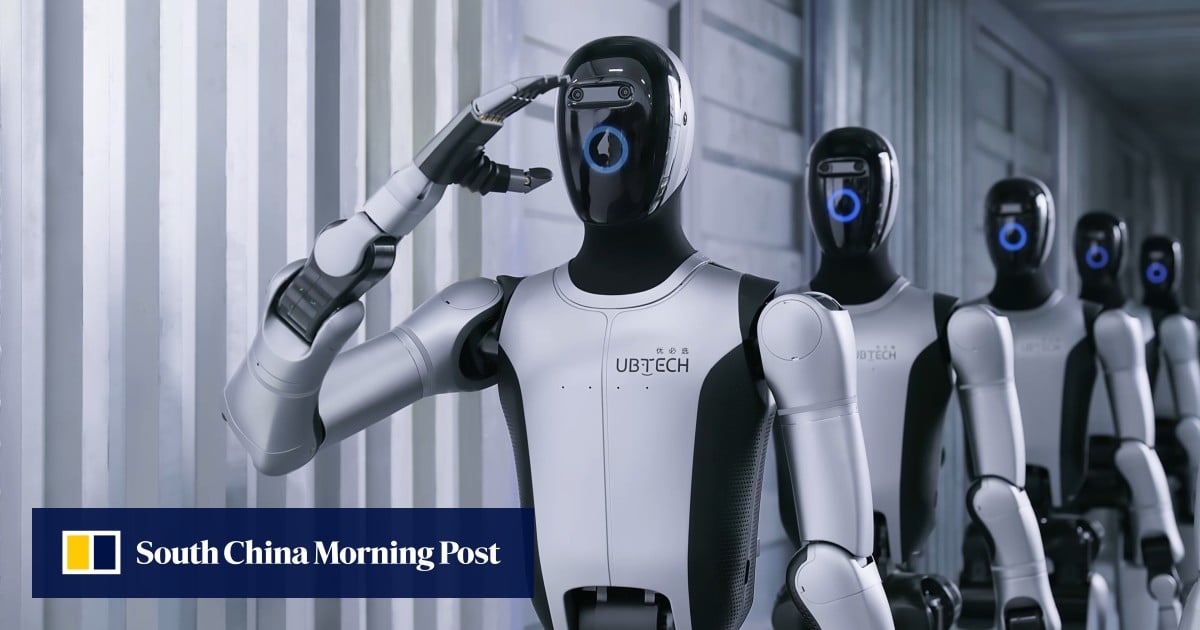
In the realm of technological advancements, a peculiar yet fascinating phenomenon has emerged: the proliferation of humanoid robots. Let us redefine the term "android" as a being that not only mimics human appearance but also embodies a certain je ne sais quoi, a spark that sets it apart from its mechanical counterparts.
This spark, however, is not merely a product of aesthetics, but rather a culmination of intricate design, artificial intelligence, and a dash of creative ingenuity.
As we venture into the uncharted territories of humanoid robot production, it becomes increasingly evident that this growth is not merely a quantitative expansion, but a qualitative transformation.
The numbers are staggering: according to recent reports, the global humanoid robot market is expected to experience a significant surge in the coming years, with major players investing heavily in research and development.
This uptick in production is not solely driven by the pursuit of innovation, but also by the prospect of practical applications, such as assistance in healthcare, education, and even entertainment.
The intersection of technology and humanity has given rise to a new breed of creations that blur the lines between the organic and the synthetic.
As we continue to push the boundaries of what is possible, we are forced to confront fundamental questions about the nature of existence and our place ← →
Other references and insights: See hereProduction cost is falling 20 per cent every year, says UBTech's chief branding officer Michael Tam during an interview with the Post• • • •

No comments:
Post a Comment